
What Are We Actually Fighting For: Analilia Mejia, J Street, and the Cost of Cognitive Rigidity
The master's tools will not dismantle the master's house — we've got to stop using them.

The J Street Conversation
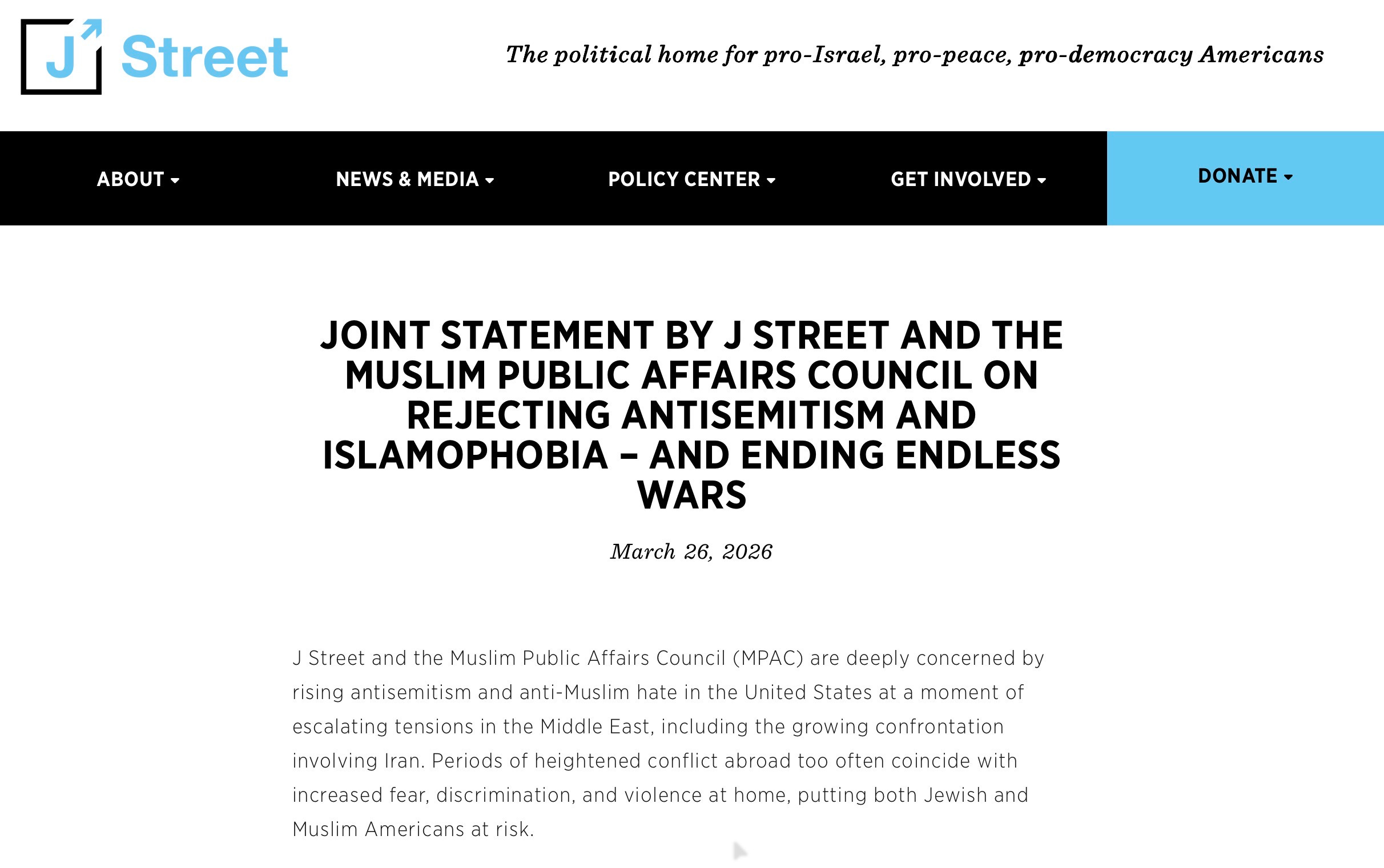
This week, a NJ Democratic candidate accepted an endorsement from J Street, a liberal Zionist PAC that many refer to as “AIPAC lite” (which isn’t necessarily false). This endorsement led to a public and polarizing conversation. Before I started organizing for IL State Legislation, I probably would have had the same knee-jerk reaction to a candidate taking a J Street endorsement. But that knee jerk reaction ignores the unlikely alliances needed to make incremental changes.
Zionism is a political belief rooted in ethno-nationalism and responsible for the ethnic cleansing of Palestinians, and now Iranians and the people of Lebanon. Liberal Zionists believe that the Israeli government can be reformed. I do not.
But I also believe that the American government was built on genocide and apartheid and cannot be reformed. That it’s working exactly as it is designed. But if I were to alienate every person who believed that the American and Israeli governments can be reformed, I’d have few allies to actually make a difference with.
I also have a red line at genocide. But holding it with full moral seriousness doesn’t require abandoning the strategic thinking that gives us any chance of changing something. If we care about the people on the other side of that line, we owe it to them to be as tactically disciplined as we are morally committed.
We need to stop the violence by any means necessary — and that’s going to be uncomfortable.
I don’t necessarily believe that J Street is “good”. But I do think they are useful and provide entrenched Zionists an off-ramp from AIPAC and permission structure to repeal anti-BDS laws and condition aid to Israel without fear of being outcast as “antisemitic”.
Our Brains Under Authoritarianism
Authoritarians manufacture chaos deliberately. Under cognitive overload, we become susceptible to the same rigidity that allows authoritarianism to survive.
We stop tolerating ambiguity and start reaching for absolute terms, simple answers, clear enemies.
As ideological rigidity increases on both ends of the spectrum, cooperation collapses and movements fracture from within.
Oversimplified red lines are a symptom of that state. But over-simplified criteria causes us to welcome in people who are actively harmful while blocking potential short-term allies.

Brain imaging research confirms this isn't only a right-wing phenomenon: authoritarian attitudes across the political spectrum are linked to reduced capacity in the prefrontal regions that govern impulse control and complex reasoning.
The line gets drawn for ease of mind, not for building power, and that's exactly what authoritarians rely on to keep us from organizing.
A red line at genocide is not effective if that red line prevents us from building power required to stop the genocide.
In We Do This 'Til We Free Us, Mariame Kaba invokes Kwame Ture:
"When you see people call themselves revolutionary always talking about destroying, destroying, destroying but never talking about building or creating, they're not revolutionary. They do not understand the first thing about revolution. It's creating."
She further explains that we are both products and perpetuators of the system we're trying to dismantle. We can't simply destroy it - the system itself is ingrained in us and we continue to rebuild that system until we unlearn how we uphold it.

“The master's tools will never dismantle the master's house.” - Audre Lorde
Cancel culture and public call-outs are also tools authoritarian regimes use to silence dissent, enforce conformity, and make the cost of deviation visible and public.
When we deploy those tools, we’re training ourselves and our communities to respond to ideological impurity with public punishment. Again, this is what prevents movements from building.
Provide Off-Ramps
Authoritarian systems hold because of infrastructure — business, labor, faith institutions, education, civil service, military and police. We can chip away at those pillars by giving people off-ramps and spaces to move a notch over. Our job is to make sure that somewhere exists, and not burn it down because the person stepping onto it isn’t fully there yet.
J Street is an off-ramp from AIPAC’s stranglehold on U.S. foreign policy. A candidate who takes it has moved, and can be moved further. Treating that as betrayal closes the door on one of the few paths that might actually matter.

That’s one of the most threatening things that can happen to an authoritarian system — and one of the first things our movements shut out with purity standards. If we have no room for people leaving the institutions that prop up the regime, we’ve ceded that ground entirely.
Bill Moyer’s Movement Action Plan describes the goal of movement: slow erosion of the supports that hold power in place — accumulated pressure from every person willing to take one step further than where they stood before.
You can hold your values completely and still make room for people who are moving toward them. That’s a requirement of organizing.